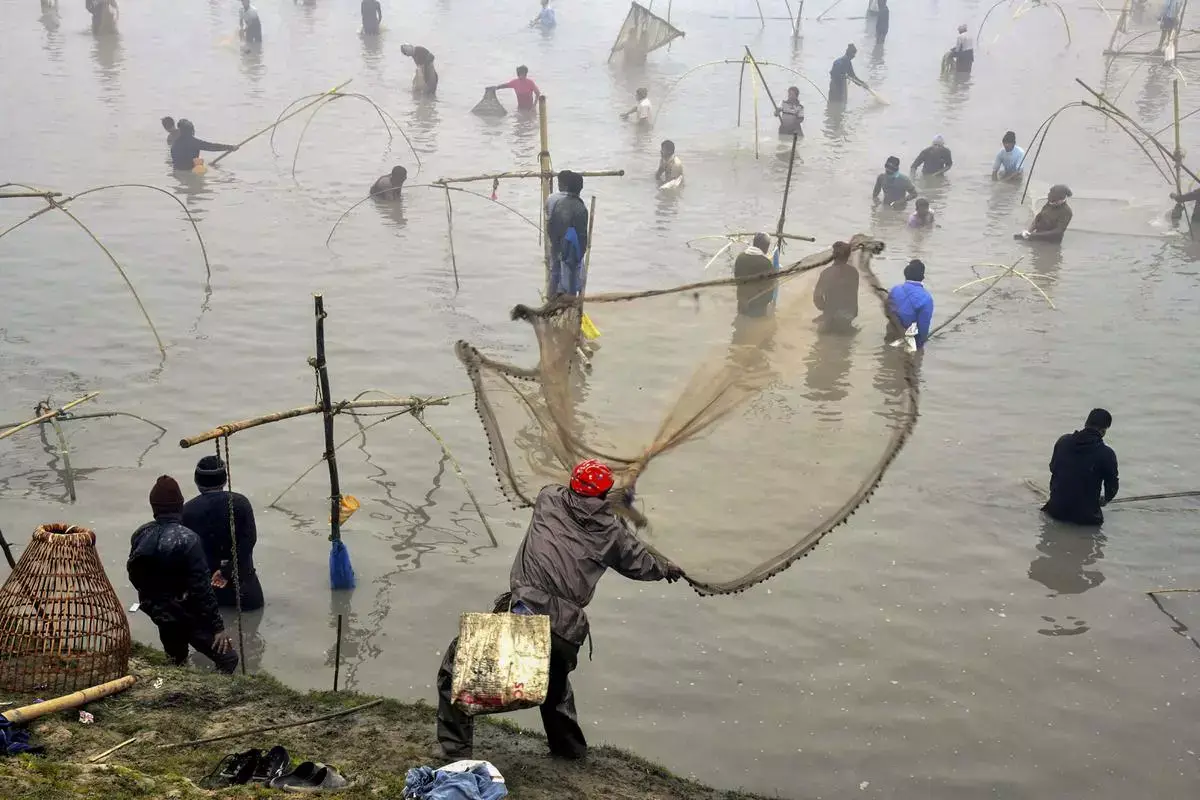
Department of Fisheries Signs Agreement with ONDC

Department of Fisheries Signs Agreement with ONDC

The Department of Fisheries (DoF) has signed a Memorandum of Understanding (MoU) with the Open Network for Digital Commerce (ONDC) to provide a digital platform for buying and selling fish and fish products through e-marketplace. The MoU was signed in the presence of Union Minister of Fisheries, Animal Husbandry and Dairying Shri Parshottam Rupala, Minister of State Dr. L Murugan, Secretary (Fisheries) Dr Abhilaksh Likhi, Joint Secretary (Inland Fisheries), Shri Sagar Mehra, MD, ONDC Shri. T. Koshy and other esteemed dignitaries on 19 February 2024 at New Delhi.

Department of Fisheries and ONDC objectives

The collaboration aims to empower all stakeholders in the fisheries sector, including traditional fishermen, fish farmers, Fish Farmer Producer Organizations (FFPOs), self-help groups, entrepreneurs and cooperatives by connecting them in a structured manner through ONDC’s unique e-marketing platform. ONDC is an initiative of the Ministry of Commerce and Industry to promote open network based digital commerce that is inclusive, transparent and interoperable.

The MoU will enable the DoF and ONDC to work together on various aspects such as capacity building, training, outreach, awareness generation, data sharing, monitoring and evaluation to ensure effective implementation of the digital commerce platform in the fisheries sector. The MoU will also facilitate the promotion of value-added fisheries products that will allow producers to capture higher margins and diversify their product offerings.

Union Minister Shri Parshottam Rupala hailed the MoU as a historical step towards fulfilling the Digital India initiative and transforming the fisheries sector through initiatives like Blue Revolution, Pradhan Mantri Matsya Sampada Yojana (PMMSY), Fisheries and Aquaculture Infrastructure Development Fund (FIDF) and Kisan Credit Card (KCC). He emphasized that the collaboration would serve numerous benefits for fisheries industries such as reduced transaction costs, increased market reach, improved transparency, increased competition & competitiveness, innovation and employment generation.

Stakeholders’ Views and Experiences

Minister of State Dr. L Murugan highlighted the groundbreaking nature of the collaboration and its potential to revolutionize the fisheries sector. He stressed the importance of automation in the value chain and fish processing units while interacting with fishermen and FFPOs during MoU signing ceremony. He also expressed his happiness over providing digital platform to the traditional fishermen, FFPOs and other stakeholders for buying and selling fish and fish products through e-market.

Secretary (Fisheries) Dr Abhilaksh Likhi underscored the importance of capacity building, training and outreach efforts to empower fishermen in utilizing ONDC’s features effectively. He also appreciated the efforts of FFPOs and their success stories such as development of live fish transport unit.

MD, ONDC Shri. T. Koshy thanked the DoF for their support and cooperation in making this collaboration possible. He assured that ONDC would provide all the necessary technical assistance and guidance to ensure smooth functioning of the digital commerce platform in the fisheries sector.

The MoU signing ceremony was also attended by representatives of FFPOs, who shared their experiences of before and after getting onboarded at ONDC platform. They expressed their gratitude to the DoF and ONDC for providing them with an opportunity to access wider markets and increase their income.

Conclusion

The Department of Fisheries has signed a MoU with ONDC to provide a digital platform for buying and selling fish and fish products through e-marketplace. This is a milestone for digital commerce in fisheries sector that will benefit all stakeholders involved.

Recent Blog : Xiaomi Premium Journey Will Persist: Muralikrishnan B

Share:

MORE STORIES

## Navigating the AI Revolution: 5 Trending Google Ads Topics for Marketers As Google Ads continues its rapid evolution, staying ahead of the curve is paramount for digital marketers. The platform’s increasing reliance on artificial intelligence, shifting privacy landscapes, and the introduction of new campaign types are creating a fresh set of challenges and opportunities. Here are five top trending blog topics that delve into the most critical areas of Google Ads today. ### 1. The Rise of the Machines: Mastering AI-Powered Campaign Types Google is unequivocally betting on AI to drive the future of its advertising platform. A key area of focus for marketers is understanding and mastering AI-driven campaign types like Performance Max and Demand Gen. These campaigns automate targeting, bidding, and ad creation across Google’s entire inventory. A deep dive into strategies for providing the right inputs to these “black box” models, interpreting their performance, and understanding how to guide the AI for optimal results is a crucial topic for advertisers looking to succeed in this new era. ### 2. Beyond the Click: Navigating the New Landscape of Measurement and Attribution With the impending deprecation of third-party cookies and a growing emphasis on user privacy, the way advertisers measure success is undergoing a fundamental shift. This has propelled topics like enhanced conversions, consent mode, and the integration of first-party data to the forefront. Marketers are actively seeking guidance on how to implement these privacy-centric measurement solutions to gain a more accurate and holistic view of their campaign performance in a world without granular user tracking. ### 3. Creative is the New Targeting: Leveraging AI for Compelling Ad Experiences In an automated world, the creative has become a key differentiator. Google is investing heavily in AI-powered tools that can generate and optimize ad copy, images, and videos. Blog posts that explore how to effectively use these generative AI features to create a high volume of diverse and engaging ad creatives are gaining significant traction. This includes best practices for providing creative inputs, A/B testing AI-generated assets, and ensuring brand consistency across automated campaigns. ### 4. The Evolution of Search: Adapting to a More Conversational and Visual SERP The traditional keyword-based search is evolving. Users are increasingly employing longer, more conversational queries, and Google is responding with a more visual and AI-driven search engine results page (SERP). This shift requires a re-evaluation of traditional keyword research and bidding strategies. Trending discussions revolve around how to adapt to this new reality, including the role of broad match keywords, the importance of high-quality creative in visual search formats, and strategies for capturing intent in a more conversational search landscape. ### 5. Future-Proofing Your Strategy: The Growing Importance of a Full-Funnel Approach As automation takes over many of the manual levers within Google Ads, the focus is shifting towards a more strategic, full-funnel marketing approach. Advertisers are looking for insights on how to effectively use different Google Ads campaign types to guide users through the entire customer journey, from initial awareness to final conversion and retention. This includes discussions on how to structure campaigns to complement each other, allocate budgets across the funnel, and measure the impact of upper-funnel activities on bottom-line results.

Google Ads is in the midst of a quiet revolution—one driven by artificial intelligence, privacy-first regulations, and a rapidly changing search landscape. For digital marketers,

Send Us A Message